
Bloating Treatment
Discover a personalized approach to reduce bloating, support better digestion, and help restore balance to your gut health. Get expert guidance to address the root causes of discomfort and improve your overall wellbeing.
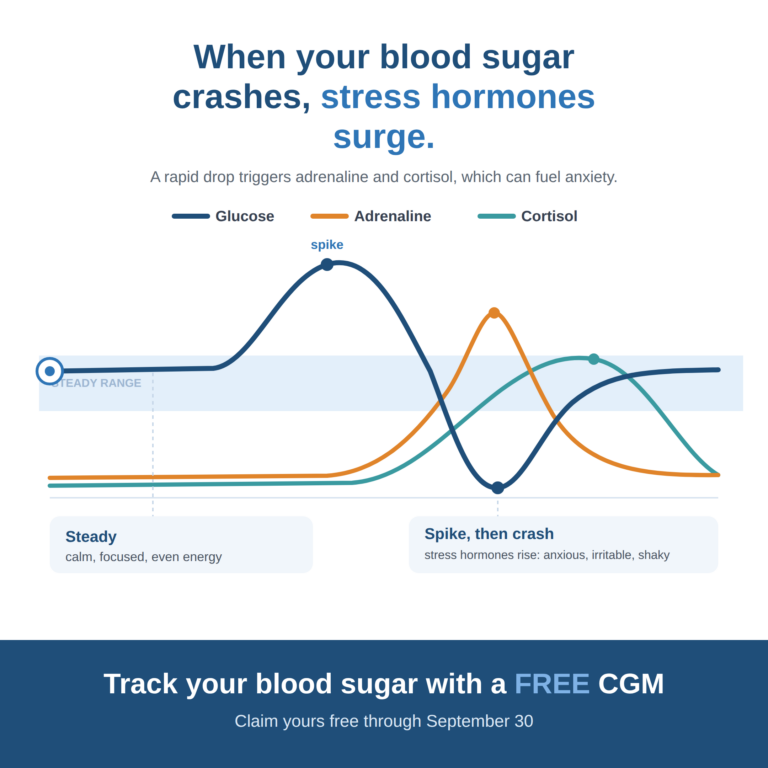
Glucose instability is one of many interacting factors that shape cognitive and emotional state. And the relationship runs in both directions. Blood sugar swings can worsen mood, while stress and low mood can make blood sugar harder to control. Each one feeds the other, which is part of why these patterns can be so persistent.
This is where measuring becomes useful. A continuous glucose monitor, or CGM, is a small sensor worn on the arm that shows your glucose in real time on your phone. Rather than guessing whether your afternoon brain fog is related to lunch, you can see it. You can see what a particular breakfast does, what a short walk after dinner does, and what a poor night of sleep does the following day. For anyone who suspects their symptoms track with blood sugar, that visibility turns a vague suspicion into something you can actually work with.
One honest caution. A CGM is not right for everyone. For some people, particularly those managing anxiety, obsessive tendencies, or a history of disordered eating, watching a number all day can increase distress or push eating toward rigidity. That is the opposite of the goal. Used well, the data should reduce uncertainty, not add a new thing to worry about.
If you notice mood changes, impaired concentration, or anxiety that seem to cluster around meals or around your energy highs and lows, tracking those patterns may help identify what is actually driving them.
For a limited time, I am offering a free two week continuous glucose monitor to my community. There is no cost and no obligation. It is a straightforward way to find out whether your blood sugar is part of your story.
Offer good through September, 2026.
P.S. If you found this useful, forward it to someone who needs to hear it. Everyone can benefit from seeing their blood sugar in real time.